Many homes across Massachusetts deal with basement moisture every spring. April usually brings steady rain, thawing ground, and soil so saturated it has nowhere else to go. That water starts pressing against the foundation and looking for the easiest way inside. Small cracks, weak joints, and old problem spots suddenly get promoted back onto the schedule.
Some homeowners find a puddle near one wall and hope it was a one-time thing. Some notice peeling paint or that chalky residue creeping across the concrete. Others catch the musty smell first, right when they walk downstairs to grab holiday bins or start the laundry. It’s surely impressive how basement water has a talent for showing up during ordinary moments.
The good news is that moisture problems usually leave clues before they become major repairs. When you understand what those clues mean, you can make better decisions, ask smarter questions, and avoid paying for fixes you do not need.
Quick Summary
- Spring rain and snowmelt can expose hidden basement moisture problems across Massachusetts.
- The right fix depends on where water enters and what is causing it.
- Interior drain systems can control seepage before it spreads across the floor.
- Better moisture control can reduce humidity, odors, and mold risk.
- A clear inspection saves time, money, and guesswork.
Why Basements Take on Water in Massachusetts
Basement water rarely starts where you see it–the puddle in your basement is just the symptom. The real issue usually begins outside the house or underneath the floor, where rainwater, groundwater, and pressure build up over time.
Heavy Rain and Saturated Soil
The ground around your home can only hold so much water. After days of rain or spring thaw, the soil becomes overloaded. When that happens, water starts pressing against your foundation walls and basement floor.
Concrete may look solid, but it can have tiny pores, hairline cracks, pipe openings, or seams where walls and floors meet. Water looks for those weak spots first. That is why you can have a damp basement even when the wall looks perfectly normal.
If water shows up after storms and then disappears when things dry out, outside pressure is often the reason.
Freeze-Thaw Wear Over Time
Winters in Massachusetts are hard on foundations. Water in the soil freezes, expands, and pushes against the ground around your home. When temperatures warm up, the soil settles again.
That cycle repeats year after year. Small cracks can widen. Old patch jobs can loosen. Tiny openings that never caused trouble before can start letting water in.
Many homeowners think, “We have lived here for years. Why now?” In many cases, the leak did not start overnight. It slowly developed until it became noticeable.
Humidity Without Standing Water
Not every basement moisture problem looks like a puddle on the floor.
Sometimes the first sign is sticky air, a musty smell, condensation on pipes, damp cardboard boxes, or mildew on stored items. You may notice the space feels clammy in summer or that fabrics and paper smell stale.
That still matters. Ongoing moisture can damage belongings, make finished basements less comfortable, and create conditions where mold is more likely to grow. A dry basement is not just about preventing floods. It is also about controlling the moisture you cannot always see.
Common Basement Drainage Systems Explained
The best system depends on where water appears, how often it happens, and how your home was built.
The Interior Drain Systems Massachusetts Homeowners Often Choose
Basement water problems don’t all start the same way, so the right drainage system depends on where the water is coming from and how your home is built. Many homes in Massachusetts do best with a drainage system that captures water before it spreads across the basement floor.
These systems are installed below or alongside the floor where water tends to appear first. Instead of chasing puddles after every storm, the goal is to control the water at the entry point and move it out safely.
Interior Perimeter Drain Systems
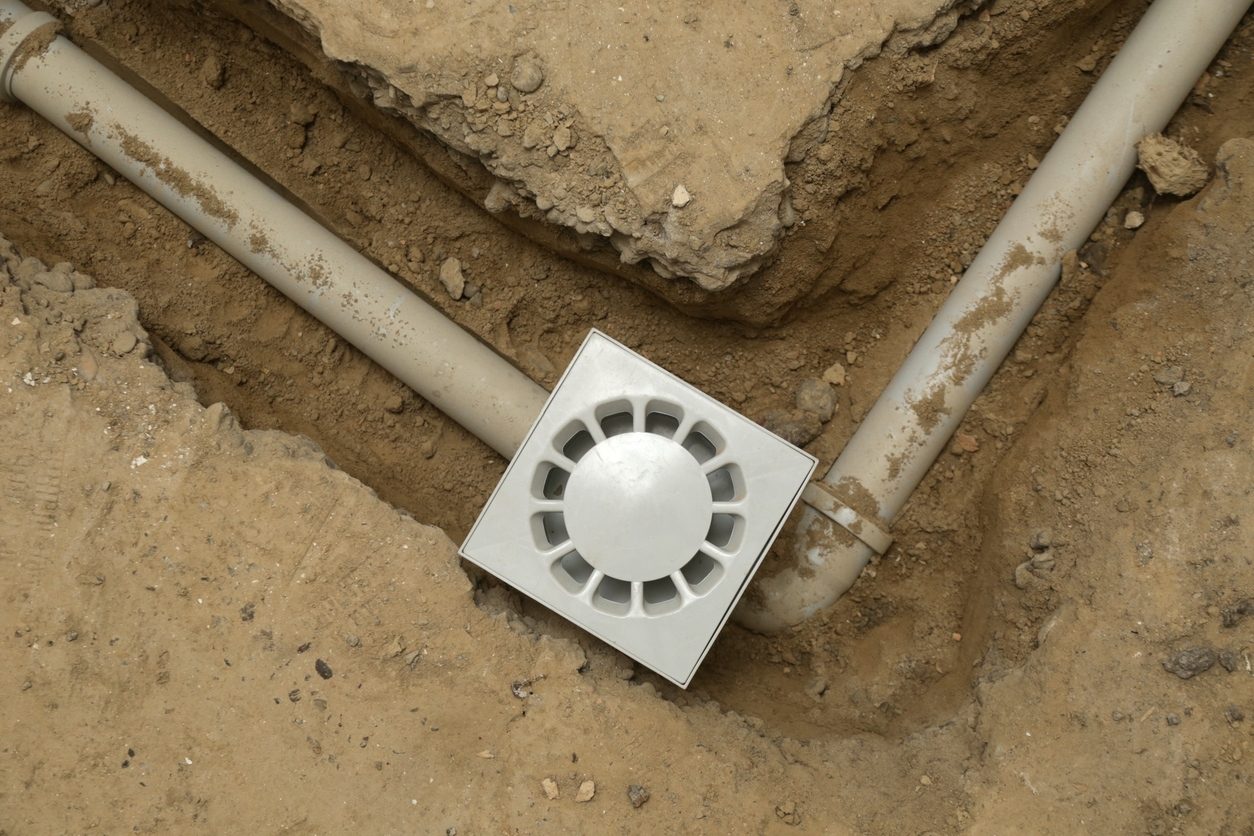
Interior perimeter drain systems sit below the basement floor along the foundation walls. They collect seepage where the wall meets the floor and direct it toward a sump pump basin.
This is a common choice for recurring leaks along the edges of the basement or water that appears after heavy rain. Homeowners often ask if installation is disruptive. Some concrete work is usually involved, but a well-run crew keeps the project organized and clean.
Drain Tile Systems
Drain tile systems use perforated piping installed around the basement perimeter or below the slab to collect groundwater and move it away before pressure builds.
Despite the name, modern drain tile systems are usually pipe-based, not actual tile. The term has simply stayed around. These systems can be a strong fit when the issue is steady groundwater pressure instead of one isolated leak.
French Drains
Many homeowners search for French drains because the name is familiar. In practice, the term often refers to a gravel-and-pipe drainage system that redirects water away from problem areas.
Depending on the basement layout and source of the moisture, a French drain may be used inside or outside the home as part of a larger waterproofing plan.
If water repeatedly enters the same area, this may be one of the options worth discussing during an inspection.
Sump Pumps and Discharge Lines
A drainage system needs somewhere to send the water. A sump pump collects water from the system and pushes it outside through a discharge line. The line should carry water far enough from the home that it does not drain right back toward the foundation.
When pumps seem to run constantly and moisture still returns, the discharge setup is often part of the problem.
Pressure Relief Systems
Some basements take on water from below the floor. Groundwater can build pressure under the slab and push moisture through cracks, joints, or low seams. Pressure relief systems are designed to relieve that pressure and redirect water into the drainage system before it reaches the surface.
This is often a smart fit when seepage appears through floor cracks or in the same low area after storms.
Crack Repair for One Clear Entry Point
Sometimes, the best question to ask is simple: What is the smallest repair that will truly solve the problem? Not every leak calls for a full drainage system. Some basements have one visible crack that is letting water in. A targeted crack repair may solve the issue without larger construction. A trustworthy contractor will be able to help guide you through the best solution.
Some Homes Need a Combination of Fixes
One basement can have more than one issue. You might need crack repair on one wall, a drain tile system for groundwater, or a French drain to redirect water in a problem area. Good waterproofing starts with diagnosis, not a one-size-fits-all sales pitch.
How Basement Water Management Helps With Humidity and Mold
A dry basement is about more than keeping puddles off the floor. Moisture affects how the space smells, how it feels, and what condition your belongings stay in over time.
Even small amounts of hidden dampness can create ongoing problems if nothing changes.
Lower Moisture in the Air
When water intrusion is controlled, the basement often feels different almost right away. The air can feel less sticky, less heavy, and easier to breathe in.
Musty odors may improve because damp concrete, wet dust, and hidden moisture are no longer feeding that smell day after day.
People sometimes assume the odor is “just a basement smell.” It usually is not. It is a moisture clue.
Protecting Storage and Finished Areas
Basements tend to hold the things people do not want to lose. Holiday decorations, photo bins, tools, extra furniture, documents, keepsakes, and seasonal clothes often end up downstairs.
Those items do better in a dry environment. So do finished materials like flooring, drywall, trim, and carpet.
Even without standing water, long-term dampness can warp cardboard, stain fabrics, damage wood, and shorten the life of finished spaces.
Better Everyday Comfort
Many basements are no longer just storage rooms. They are home offices, workout spaces, playrooms, TV rooms, guest rooms, and places people use every week.
Moisture control helps those rooms feel comfortable year-round. Less dampness often means fewer odors, steadier air quality, and a space that feels like part of the home instead of the forgotten lower level.
Questions to Ask Before Hiring a Professional
A good inspection should leave you more informed, not more confused.
Ask these questions:
- Why is the water showing up in this spot?
- Is this common in homes like mine?
- Why do you recommend this system?
- Are permits needed in my town?
- What maintenance will I need each year?
- What does the warranty cover?
- How long until I can use the basement again?
- What happens if I wait until the next rainy season?
If someone cannot explain the answers to these questions in detail, keep looking.
What LeBlanc Looks For During an Inspection
LeBlanc Basement Waterproofing focuses on practical solutions and honest recommendations. That starts with finding the source of the problem, not selling the biggest job.
Our company is known for quality workmanship, reinforced reconcreting methods, pressure relief systems, and scheduling enough time to do the work right. Homeowners also value the lifetime transferable warranty and the straightforward guidance that comes with it.
A Dry Basement Starts With the Right Diagnosis
Basement water problems are common across Massachusetts, especially in spring. The right fix starts with understanding how water is getting in and what will stop it for your home.
If you are seeing leaks, damp air, or that musty smell that keeps returning, LeBlanc Basement Waterproofing can help you sort out what is happening and what to do next. Call us today to get started.